RUBBER
Rubber at Hacienda Guadalupe
At Hacienda Guadalupe, rubber is our main crop. We particularly benefit from the red clay soil, ideal for this crop, which allows our trees to grow strong and productive.
The clones we work with are mainly RRIM 600, PB 260, and PB 235, with RRIM 600 being the best adapted to our climate and conditions.
We have tappers specialized exclusively in rubber, who make technical and precise cuts to obtain the highest production without harming the trees.
Regarding cultural practices, for panel fungus control we use biological products such as Bacillus subtilis and Bacillus pumilus, ensuring sustainable and environmentally respectful management.
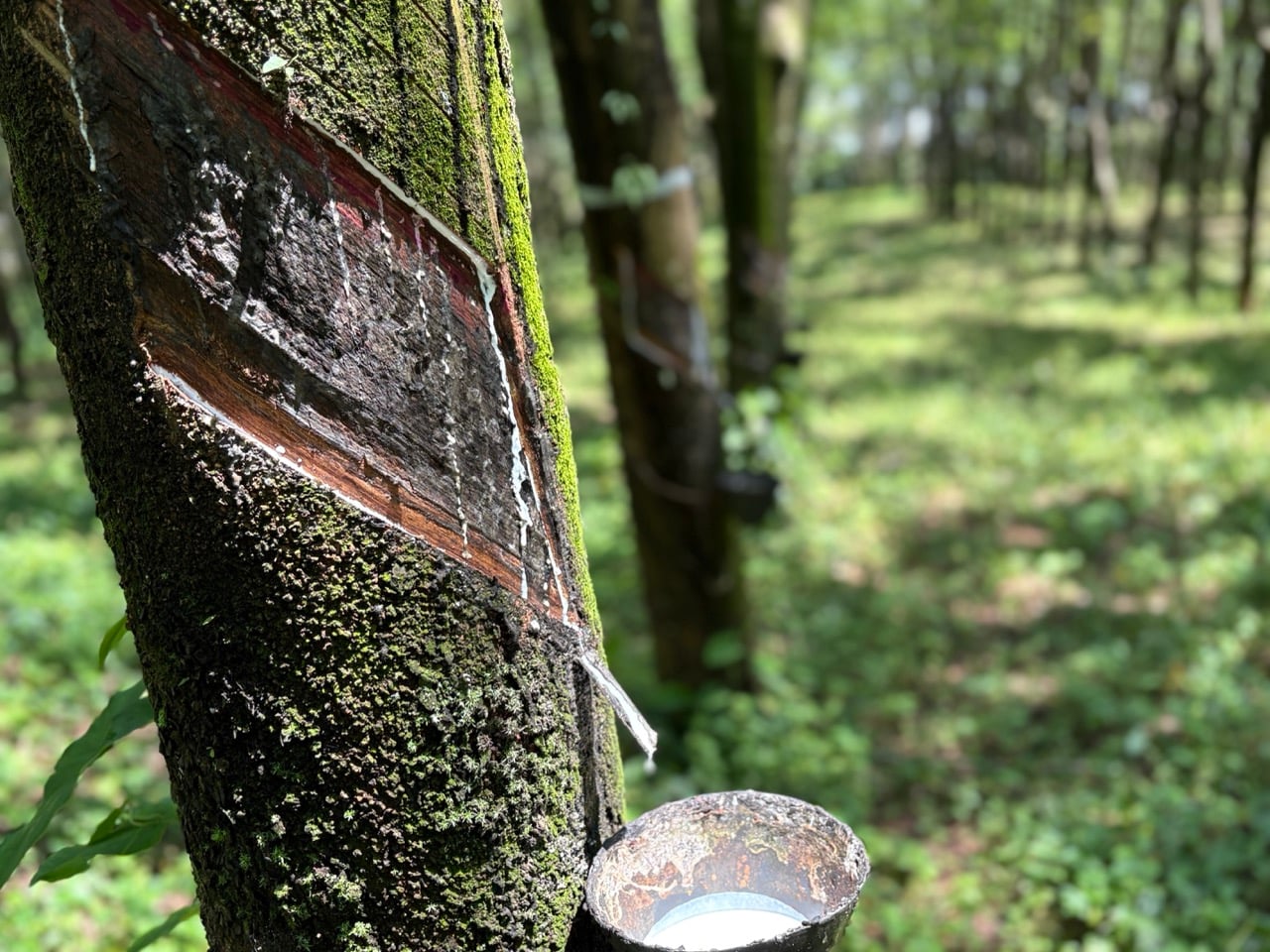
History of rubber in Guatemala
Natural rubber was introduced in Guatemala in the 1940s and, since then, became a strategic crop for the country. Today there are more than 60,000 hectares and over 30 million trees in production.
Guatemala has positioned itself as one of the leading rubber producers in Latin America, thanks to its climate and fertile soils that allow for excellent quality raw material.
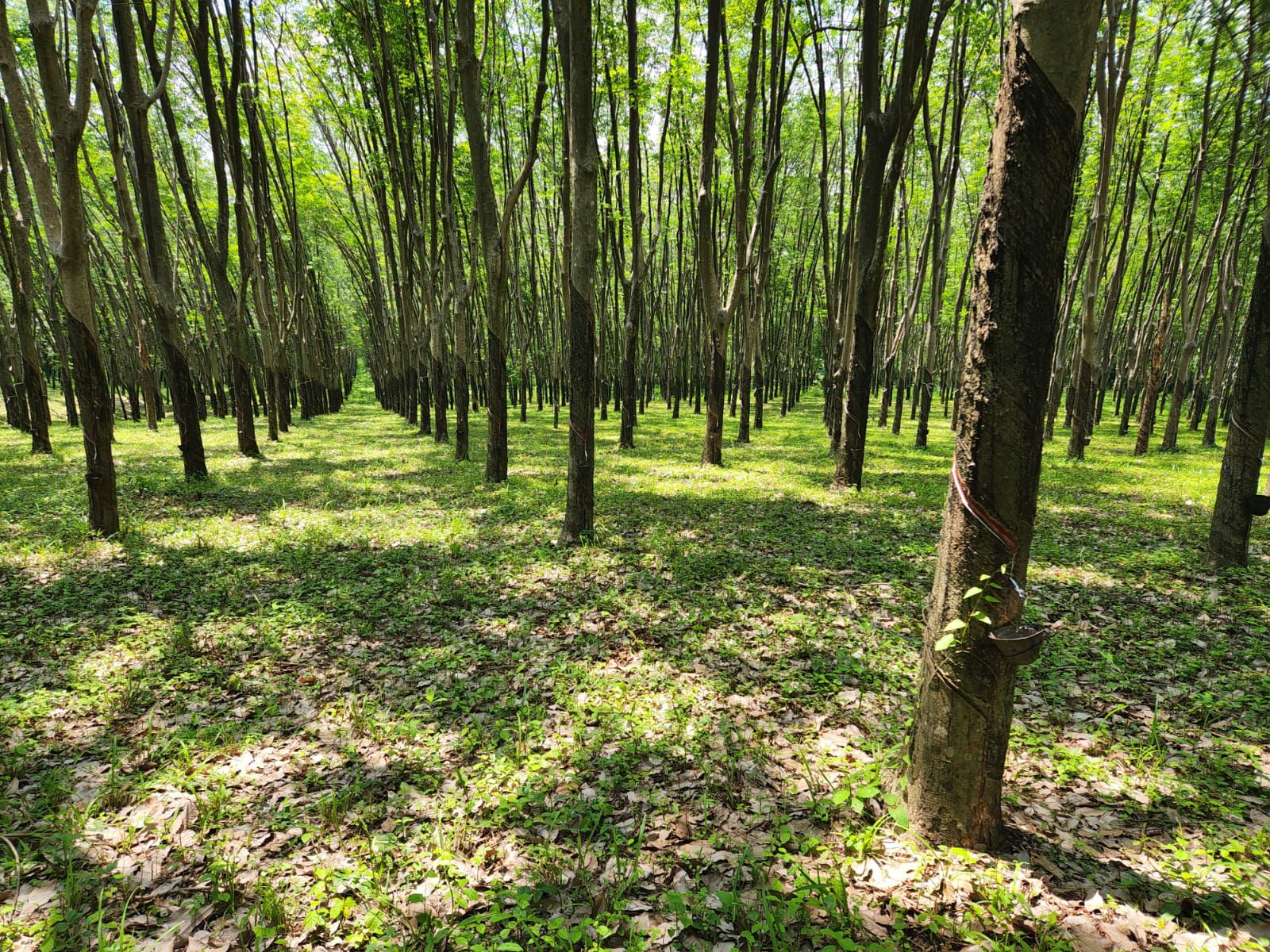
Rubber plantation at Hacienda Guadalupe
Latex and First-Grade Cup Lump
At our hacienda we collect latex and first-grade cup lump:
Latex:
is the milky liquid that flows from the tree after incision. It is the finest raw material, used in products that require high purity and elasticity, such as medical gloves, balloons, footwear, and delicate rubber articles.
First-grade cup lump:
is the transformation of liquid latex to solid, obtained through a coagulation process with formic acid.
Video: Plantation in production
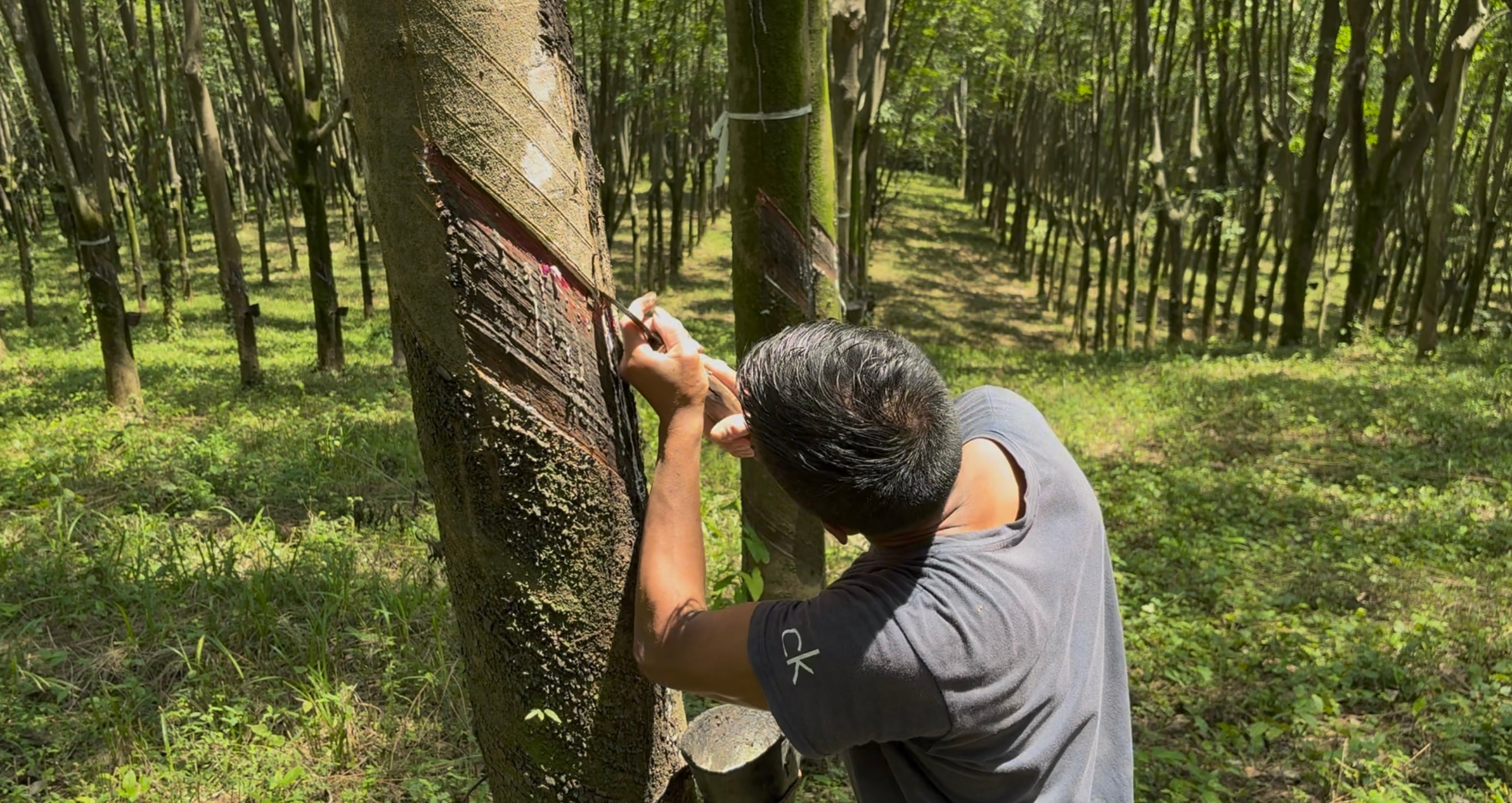
Adapted varieties and grafting technique
At Hacienda Guadalupe we work with rubber varieties that we have identified as best adapted to our climate and red clay soil. These are RRIM 600, PB 260, and PB 235.
Our process is complete and careful:
- We select fungus-resistant seeds as rootstock.
- We obtain buds from our most productive and disease-resistant trees to establish and maintain our clonal garden.
- We perform grafts to develop trees with higher productivity.
In this way, we maintain an integral cycle from seedbed to field, ensuring healthy, strong, and long-term sustainable plantations.